Facility available at no cost to residents
Residents of Kitsap, Mason, and Jefferson counties are welcome. Pierce County residents are encouraged to use a Pierce County or Tacoma facility. Limited hazardous waste items are also accepted at
Kitsap County Garbage and Recycling Facilities.
Holiday hours
Closed on July 4, Thanksgiving weekend (Thursday, Friday and Saturday), and December 24 through January 1.
Weather-related closures
Weather and other conditions may affect hours and operations. Call the facility closure line 360.674.7065 or visit the inclement weather page for updates.
Contact
360.337.5777 or help@kitsap1.com
Identifying hazardous waste
Hazardous products cannot go in the trash or recycling or down a drain! These products are usually labeled with the words danger, caution, flammable, warning, toxic, poison, or combustible. Bring these wastes to the Household Hazardous Waste Collection Facility instead. Place empty containers in the garbage.
Households can request a free site visit to get help with identifying unknown and laboratory chemicals.
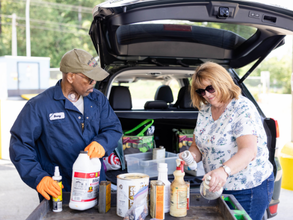
Accepted items
Commonly accepted hazardous items include:
-
Aerosols
-
Antifreeze and coolant
-
Automotive batteries
-
Automotive products
-
Compact fluorescent bulbs (CFLs) - no limit
-
Cleaning products
-
Flammable liquids and solvents
-
Fluorescent tubes, dry and untaped - limit 15 per day.
-
Gasoline and other petroleum products
-
Herbicides and pesticides
-
High-intensity discharge (HID) lamps containing mercury. Limit two per day, per person.
-
Household batteries
-
Mercury thermometers
-
Motor oil and oil filters - contaminated or uncontaminated
-
Needles/syringes - Limit 3 containers per day.
Needles/syringes must be placed inside FDA-approved sharps container (quart size preferred) or heavy-duty plastic container with screw cap (liquid detergent or bleach container). Only fill container up to 3/4 full. Label container with "Sharps-Biohazard". Notify staff that you have sharps for disposal when you arrive.
-
Paint, stain, sealer, coating
-
Paint thinner, mineral spirits, solvents
-
Pool and spa supplies
-
Pressurized fuel tanks and canisters
-
Propane tanks (up to one liter only)
-
Road flares
Not accepted
Search the
Waste Wizard to find disposal options for items not accepted at this facility. This tool provides convenient information on recycling, reuse, and proper disposal. Unacceptable items include:
-
No asbestos
-
No appliances
-
No electric vehicle batteries (EV and hybrid)
-
No electronics, TVs, monitors, or computers
-
No empty containers
-
No explosives - fireworks, ammunition, gun powder, or marine flares
-
No fertilizers, dry (unless it contains components like “weed and feed")
-
No household garbage
-
No leaking containers - place in another container
-
No medication
-
No propane tanks larger than one liter
-
No radioactive waste
-
No smoke detectors
How to use this facility
-
Drive-up to facility
-
When it's your turn, you will be directed to drive under a covered area and unload your vehicle. Staff may assist you, but they cannot enter your vehicle. The facility can accommodate persons with mobility limitations.
-
Staff will sort your waste with your assistance, and they may ask questions and provide education.
-
Household customers must provide a signature to verify the waste is from a home.
Reuse shop
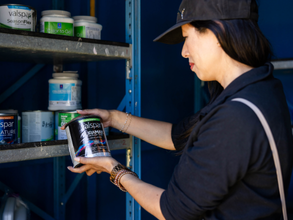
Reusable household products items are offered for free in the reuse shop. Available items
may include latex and oil-based paints, stains, sealers, and household cleaning products. Ask facility staff to browse the shop. Closed-toe shoes required.
Safe transport tips
Keep yourself, your family, and our staff safe. Follow these guidelines:
-
Put containers in a sturdy, lined box. Prevent them from tipping.
-
Place boxes in your trunk or truck bed, not the passenger area.
-
Use straps and tarps to secure boxes.
-
Use original product containers.
-
Label containers if the original label is missing.
-
Never mix different types of products.
When appointments are required
Residential customers must
request a free appointment for large loads and potentially dangerous products. You can also request a free site visit from our hazardous waste specialists to get help with identifying unknown or laboratory chemicals.
Large loads
-
Large loads are more than 50 containers, loads over 50 gallons total, or containers larger than 5 gallons. Amounts are based on container size, not the amount of product in the container. We do not accept empty containers.
Dangerous products
Potentially dangerous products include laboratory chemicals, unknown chemicals, or containers that are old, dangerous, or about to fall apart. Does not include common household hazardous products.